The cultural controversy behind the clean girl look: To whose standard is it exquisite?

The “pure and innocent girl” makeup look is sweeping social media: a sleek low ponytail, naturally highlighted hair, and almost bare-faced makeup, paired with seemingly naturally soft curls—appearing effortless and natural, but actually meticulously crafted. Many girls are chasing this “naturally perfect” image, even using heatless hair curlers before bed to create the casual curls they’ll have in the morning.
However, this seemingly effortless beauty hides a new aesthetic pressure—are you truly free? Or are you simply changing your approach, striving to approximate a certain “natural” perfection?
Has “cleanliness” become the threshold of beauty?
The term “clean girl” originated as a counterpoint to the heavy makeup trend, advocating a return to a natural, authentic aesthetic: smooth hair, clean, non-greasy skin, and barely perceptible light makeup—looking “bare-faced” from afar, yet flawless up close. It represents the aesthetic of “less is more,” a low-key yet confident way of presenting oneself.
However, with the rise of social media and filter culture, “clean girl” has gradually evolved into a sophisticated performance. You might think it’s effortless simplicity? Quite the opposite: to maintain a perfectly “natural” state, you need a meticulous skincare routine, advanced hair care and styling techniques, and the effortless creation of naturally curly hair the night before using a heatless hair curler.
This “cleanliness” has thus taken on a different form: you need time, a budget, and skills to look like you “didn’t do anything.” Therefore, those who emphasize an effortless, natural appearance have become a new kind of pressure to be sophisticated. You can’t help but wonder whether this “cleanliness” is truly free expression, or just a different set of aesthetic constraints.
Looking at “Clean Girl” from a Cultural Perspective—Who Does It Really Belong to?
Many may not know that the “clean girl” aesthetic originated in Western social circles, initially inspired by the everyday attire of Latino and African American women: neatly combed slicked-back hair, sparkling metallic earrings, and meticulously shaped eyebrows. These styles, long established in Black culture, were repackaged by white models and bloggers, evolving into a new “minimalist clean” trend.
This phenomenon has sparked controversy—when culture is redefined, the original community is often overlooked. Some commentators call this a typical case of “cultural whitewashing”: fashion expressions originally belonging to a specific ethnic group are standardized and mainstreamed, ultimately forming a singular “white, clean” aesthetic standard.
This also makes us reflect: is the pursuit of “cleanliness” truly just an expression of individuality, or is it an unconscious sway from societal expectations? When creating a natural hairstyle, using a heatless hair curler can easily achieve voluminous curls, allowing for a free and unrestrained style—perhaps this is the true meaning of “cleanliness.”

Hair becomes a symbol of “Clean”
Hair plays a crucial role in the “clean girl” look.
Want that smooth, natural low ponytail, silky strands, and flawless silhouette?
In reality, most people rely on a variety of styling tools and products. However, the damage done by traditional curling irons and high-temperature flat irons is counterproductive to the ideal of a “natural and healthy” look.
At this time, the “octopus style heatless hair curler” has become a new choice for many people. It doesn’t rely on high temperatures. Its flexible curling structure and fixed strap design allow you to style your hair while you sleep. When you remove it the next morning, your hair is soft and stylish, without the risk of burns or dryness.
More importantly, it makes “refined” hair a more everyday style. You can achieve light and fluffy curls without spending half an hour in front of the mirror, preserving that natural beauty that seems effortless.
Interestingly, the popularity of this “lazy styling tool” is actually a counterattack against the “Clean Girl” standard – we want to look clean, but we don’t want to be bound by standards.
Exquisiteness should not only have one appearance
The image of a “clean girl” often evokes a sense of tranquility and purity, but it also masks underlying anxiety. Not everyone possesses flawless skin, flowing hair, or delicate features. However, when society constantly encourages everyone to pursue such standards, sloppy, casual, or flamboyant attire is easily labeled as “vulgar.”
Beauty should never be confined by a single definition.
Some use vibrant red lips to express strength, while others express confidence with a bare face; some prefer voluminous curls, while others favor clean-cut short hair—these different styles can all present their own “cleanliness” and unique, distinct beauty. Creating natural curls easily with a heatless hair curler is also a way to style hair effortlessly and naturally.
True cleanliness isn’t about flawless perfection in front of the camera, but about allowing yourself to relax, be at ease, and embrace your true self, free from any external constraints. Cleanliness is a state of mind, not a face or a hairstyle.
When we talk about “cleanliness”, we are actually talking about self-identity
Social media has turned “image” into an intangible form of capital. Every photo and short video posted is a way of “creating a label” for oneself. As the “pure girl” aesthetic begins to spread virally across various platforms, we may need to stop and ask ourselves: Do I really like this style? Or am I just afraid of being labeled “greasy,” “tacky,” or “not clean enough”?
If your answer leans towards the latter, then we must be careful—don’t let so-called “purity” become another form of aesthetic discipline.
Because true “cleanliness” is never just a visually perfect filter, but a state of relaxation for both body and mind.
For true ease, start with your hair.
Stop using high-temperature curling tools so frequently to conform to mainstream aesthetics. Give your hair some breathing room; use a heatless hair curler to create a natural, voluminous style that won’t burn or damage your hair while preserving your unique beauty.
Remember: Simplicity isn’t about sacrificing yourself to please others but about being the most comfortable version of yourself in the right way.
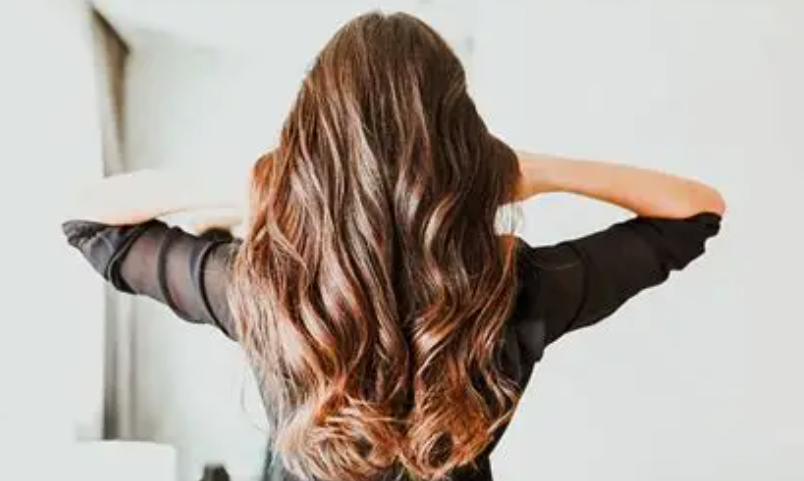
As the “clean girl” style sweeps the world, are we also trapped in another kind of beauty homogenization?
Perhaps you’ve had moments like this:
You love vibrant colors, but secretly delete that selfie with bright red lipstick, simply because it doesn’t look “clean enough.”
You think your slightly messy hairstyle is unique, but a comment saying “too sloppy” makes you hesitate;
You’re always adjusting yourself in front of the camera, conforming to the so-called “cleanliness standards” of Xiaohongshu (a Chinese social media platform).
This kind of refinement, seemingly sophisticated, often creates a hidden pressure.
But if the definition of a “clean girl” is hiding your true personality, making every strand of hair perfectly tidied (carefully curling it with a heatless hair curler, afraid to let it be too messy), is this kind of “sophistication” really worth pursuing?
Instead of pursuing a flawless appearance, perhaps we need to focus more on inner peace: not being afraid of imperfection, not caring about stray hairs off-camera, not always having to “look clean” just to please others.
Therefore, this is a question worth considering for everyone: In the pursuit of “cleanliness,” is your aesthetic for yourself or for others?
Summary : Let “clean” return to its original meaning
Back in the beginning, the appeal of the “clean girl” style lay in its comfort and authenticity .
Today, what we need to do isn’t to abandon it, but to redefine it.
Let cleanliness not just be “superior through a filter,” but “the freedom of authenticity.”
In a sense, true “cleanliness” isn’t about looking flawless, but about being able to smile freely in front of the mirror, without having to cater to anyone’s gaze.
If you want to try this style, start with small changes—like using an octopus style heatless hair curler to create your natural curls, letting the softness and shine of your hair speak for you. You’ll find that true “high-end” is never the result of complex accumulation, but the confidence to know how to make choices.