The Science of Curling: Understanding Hair Elasticity with Heatless Hair Curlers
Many people desire full, natural-looking curls but worry about heat damage from curling irons or straighteners. Prolonged high temperatures can break down the hair’s protein structure, reducing elasticity and causing dryness, frizz, and breakage. The heatless hair curler addresses this problem entirely: it creates curls without heat, relying on the hair’s natural elasticity. By using physical shaping techniques, it preserves hair health while achieving long-lasting, natural-looking curls. This article explores the science behind hair elasticity, the mechanics of heatless styling, and how different types of heatless hair curlers suit various hair types and curl preferences.
Understanding the Science: Where Hair Elasticity Comes From and How It Can Be Shaped
To understand the principle behind heatless styling, it’s essential to examine hair structure and elasticity:
Hair structure: Hair primarily consists of keratin. The outer layer, the cuticle, protects the strand, while the cortex determines elasticity, strength, and color. The cortex contains numerous disulfide bonds and hydrogen bonds. Hydrogen bonds are particularly sensitive to water and mechanical force—they play a key role in hair elasticity. When hair is wet or bent, hydrogen bonds temporarily break. Once the hair dries or the force is removed, these bonds reform, allowing hair to maintain a new shape, such as curls or straight styles.
Core logic of heatless styling: Unlike heat tools, which forcibly change hydrogen bonds with high temperatures, a heatless hair curler shapes hair physically while using ambient moisture:
Hair is wrapped around the curler—cylindrical or spiral designs apply gentle, sustained bending force, temporarily breaking hydrogen bonds.
Air humidity or light misting gradually removes water from hair while it remains curled, allowing hydrogen bonds to reform in the new shape.
After removing the curler, the hair maintains the curl naturally, without damaging keratin or permanent elasticity loss.
This method ensures healthy, resilient curls that can be reversed after washing.
Key Advantages: Why Heatless Hair Curlers Preserve Hair Elasticity
Compared to heat styling, heatless hair curlers offer three critical benefits in protecting hair:
Zero heat damage: Conventional tools reach 356–446°F (180–230°C), which can destroy disulfide bonds and keratin, reducing the hair’s ability to revert to its natural shape. Heatless styling avoids this completely, preserving natural elasticity even with frequent use.
Works with natural moisture: Heatless styling relies on hair’s moisture or light misting, keeping the cuticle closed and preventing dehydration. Hair remains hydrated, smooth, and elastic, unlike heat-styled hair, which dries out and loses resilience.
Reversible elasticity: Heatless curls are reversible. After washing, hydrogen bonds return to their original state, unlike heat-styled curls that may cause long-term deformation and loss of elasticity.
Choosing the Right Tool: Four Main Types of Heatless Hair Curlers
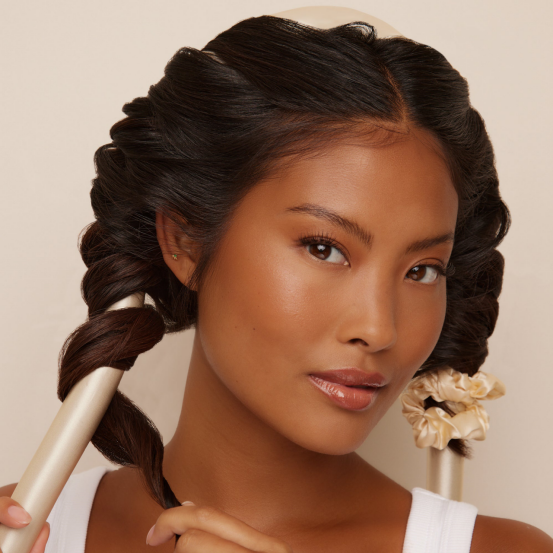
Different heatless hair curlers exploit hair elasticity to create varying curl types, suitable for different hair textures and lengths:
1. Large Wave Heatless Hair Curler: Long Hair, Loose Waves
Design: Cylindrical foam or satin curlers, 2–3 inches in diameter, 12–20 inches long, ideal for long hair.
Elasticity principle: The large diameter reduces excessive bending on long strands, protecting elasticity while producing relaxed, natural waves. The hair’s own weight stabilizes the curl.
Best use: Daily wear, romantic outings, or soft, voluminous waves, especially for fine hair.
Product link: Large Wave Heatless Hair Curler
2. Octopus-Style Heatless Hair Curler: Medium to Short Hair, Flexible Curling
Design: Main rod with multiple “tentacle” arms, 8–12 inches long, suited for medium or short hair.
Elasticity principle: Each arm wraps small sections individually, ensuring even tension and controlled curl formation without damaging natural elasticity.
Best use: Partial curls, such as bangs or ends, particularly for thicker hair types.
Product link: Octopus-Style Heatless Hair Curler
3. Short Sponge Heatless Hair Curler: Short Hair, Voluminous Small Curls
Design: Soft foam cylinders, 0.8–1.6 inches in diameter, 4–8 inches long, ideal for short hair. Multiple curlers can be used simultaneously.
Elasticity principle: Small diameter creates tighter curls for volume without overstretching strands, maintaining hydration and elasticity during shaping.
Best use: Teddy or small fluffy curls, especially for fine hair.
Product link: Short Sponge Curling Heatless Hair Curler
4. Wrapping Strip Heatless Hair Curler: All Hair Types, Easy Operation
Design: Long satin or cotton strips with adjustable fasteners, 20–32 inches long.
Elasticity principle: Evenly distributes tension, prevents overbending, and uses hair’s natural elasticity to form curls. Adjustable fasteners prevent excessive pressure that could reduce elasticity.
Best use: Beginners or overnight styling, suitable for all hair lengths and textures.
Product link: Wrapping Strip Heatless Hair Curler
Scientific Usage: Three Tips for Lasting Curls and Hair Elasticity
Pre-styling hydration: Lightly mist hair with water to activate hydrogen bonds. Hair should be slightly damp, not wet or dry, for optimal curl formation.
Proper tension: Wrap hair around the curler with moderate tension—tight enough for shaping but loose enough to avoid pulling that damages the cortex. Adjust based on hair type: fine hair slightly tighter, thick hair slightly looser.
Air drying for elasticity: Let hair air-dry completely before removing curlers. Avoid blow-drying, which can break hydrogen bonds. Use fingers to separate curls gently to maintain natural elasticity.
Frequently Asked Questions
Q: Can heatless curls last all day?
A: With proper moisture and tension control, curls can last 6–12 hours depending on hair type. Fine hair may require light hairspray for longevity.
Q: Are heatless curlers suitable for all hair types?
A: Yes. Choosing the right curler—small foam for short hair, large wave for long hair—ensures compatibility with various textures and lengths.
Q: Will repeated use affect hair elasticity?
A: No. Unlike heat styling, heatless curlers do not alter protein structure, so repeated use preserves natural elasticity.
User Experience: Why Heatless Curlers Are Gaining Popularity
Users report that heatless hair curlers are comfortable to sleep in, easy to adjust, and produce consistent, natural curls. Many appreciate the health benefits—hair remains shiny, soft, and resilient—without the worry of heat damage. From casual waves to defined curls, heatless styling provides versatility while preserving hair integrity.
Conclusion: Achieve Beautiful Curls Without Compromising Hair Health
The key principle of heatless styling is working with hair’s natural elasticity rather than forcing it. Heatless hair curlers use physics and moisture to form long-lasting curls without damaging keratin or disulfide bonds. Whether creating loose waves for long hair, partial curls for medium hair, or small voluminous curls for short hair, selecting the appropriate heatless curler allows you to achieve stunning, healthy curls scientifically. Say goodbye to heat damage and embrace effortless, elastic, and beautiful hair.